Subscribe if you want to be notified of new blog posts. You will receive an email confirming your subscription.
Trend Spotting: Health Systems Unite to Build Collaborative Platforms (Part I)
- Trend Spotting: Health Systems Unite to Build Collaborative Platforms (Part I)
- Trend Spotting: Health Systems Unite to Build Collaborative Platforms (Part II)
by Vince Kuraitis, JD and Randy Williams, MD
At first it might appear that traditional health systems are severely threatened by the new world of digital transformation, Big Tech and Big Retail. But…we’re observing that leading health systems have found a new way — collaborative, provider sponsored platforms.
In Part I we’ll briefly profile three recently formed, provider sponsored platforms: Truveta, Xealth, and Graphite Health.
The scale of these new provider platforms goes beyond anything seen today in local health care markets. Truveta’s providers represent more than 16% of all U.S. patient care. Xealth is available to more than 100,000 physicians. Graphite Health serves more than 30 million patients.
In Part II we’ll comment on the “why” — describing market forces leading to provider sponsored collaborative platforms. We will then characterize some of the challenges faced by these new provider sponsored platforms.
Truveta
Truveta “was founded by innovative health system members who believe their collective de-identified data can be used to accelerate research, advance health equity, and save lives”. The Truveta platform currently has 20 health provider members and has acquired $195 million in funding. Truveta and Xealth both are spinouts from Providence health system.
The platform:
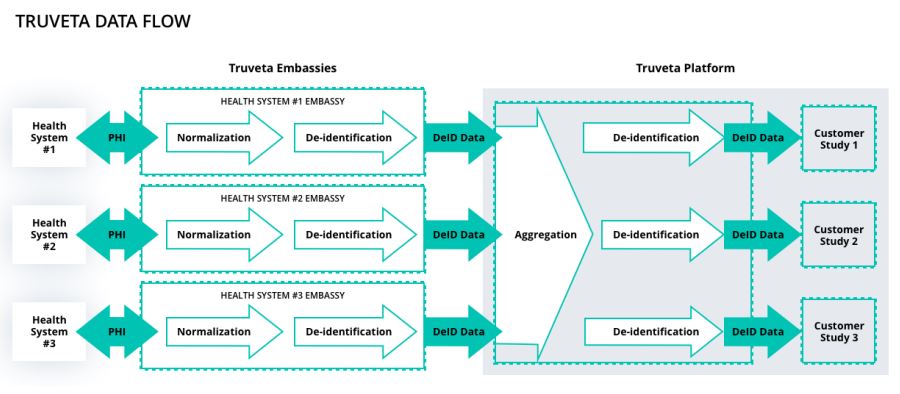
“We are building the world’s largest clinical data platform, using billions of de-identified clinical data points to uncover insights with a single search. The Truveta platform will enable the health community to learn rapidly from each other from exabytes of de-identified data, turning data into knowledge near real-time, all while carefully protecting patient privacy and data security.” Truveta CEO Terry Myerson
Xealth
Xealth “is a digital health prescribing platform that enables clinicians to easily integrate, prescribe and monitor digital health tools for patients from their EHR workflows.” Xealth initially was sponsored by 14 health systems (now 15) and has acquired $52.5 million in funding.

The platform:
“Xealth’s platform enables physicians and care teams to easily order and monitor digital tools – everything including patient education articles and videos, remote patient monitoring devices, shared decision-making tools and questionnaires, traditional smartphone apps patients need to download , and even services requiring patient enrollment.” Xealth website

Graphite Health
Graphite Health described the problem it’s trying to solve: “Health systems spend up to two years on average implementing new apps; negotiating the contracts and evaluating the security protocols alone can take more than six months. Graphite Health is creating a standardized, interoperable data platform that enables a secure and open marketplace to streamline the distribution of digital health solutions for both health systems and entrepreneurs.” Graphite Health has three organizing member health systems.
The platform:
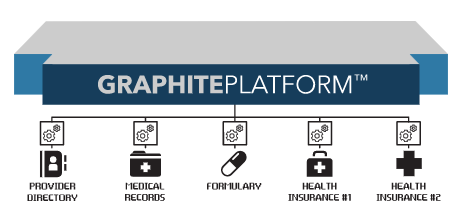
Graphite Health is “creating a common data language and interoperable data platform for health care that will facilitate plug-and-play interoperability for health systems and their patients…The Graphite Marketplace will streamline both sides of the digital health market. It will serve as a single location for innovators to distribute their solutions at scale” Graphite Health website
These new provider platforms share many commonalities: they all have multiple health system sponsors, a shared technology platform, potential to scale beyond what any individual system could achieve, and an ability to capture new troves of data. There also are significant differences in sources of funding, business models, and governance models.
In Part II, we discuss the “why” of collaborative platforms and some of the challenges they face. Please subscribe to receive future email notifications. Click here to view Part II.
This work is licensed under a Creative Commons Attribution-Share Alike 3.0 Unported License. Feel free to republish this post with attribution.