Subscribe if you want to be notified of new blog posts. You will receive an email confirming your subscription.

JAMIA Study Reports 22-68% Interoperability Across EHR Platforms: 7 Implications
by Vince Kuraitis, JD and Ian McNicoll, MD
A recent study of EHR interoperability found that 68% of data was “understood” when exchanged across different sites using the same vendor, but only 22% was “understood” when exchanged across different EHR vendors.
The study was published in the Journal of the American Medical Informatics Association (JAMIA). In this post, we will:
- Summarize the JAMIA study and its findings
- Interpret the findings
- Discuss possible solutions
- Describe seven implications
While we mostly agree on the study’s findings, we’ll offer some nuanced interpretations. Vince is a U.S. based healthcare consultant focusing on platform strategy and business models. Ian brings a European perspective – he is a former Scottish GP turned medical informatics expert.

Trend Spotting: Are Local Care Providers Losing the Telehealth Platform Wars?
by Vince Kuraitis, JD and Randall Williams, MD
Two recent surveys shed light on the issue of patient loyalty to local care providers for telehealth visits. While the findings are mixed, local providers should be concerned about how they’re faring in the telehealth platform wars. Let’s take a look at both surveys.
Early Evidence Suggested Patients Preferred Their Own Providers for Telehealth Visits
Early evidence suggesting patient loyalty to their own providers was shown by The COVID-19 Healthcare Coalition Telehealth Impact Study Work Group. Their survey asked about telehealth encounters between March 1, 2020 and January 30, 2021 and included 2,007 respondents.
As shown in the graphic below, the findings demonstrated that a vast majority of telehealth services were taking place with “my own provider” (ranging from 71% for 18-30 year olds to 83% for those 65 or older) or “another provider in my own provider’s practice (ranging from 5 to 8%).
Trend Spotting: Health Systems Unite to Build Collaborative Platforms (Part II)
by Vince Kuraitis, JD and Randall Williams, MD
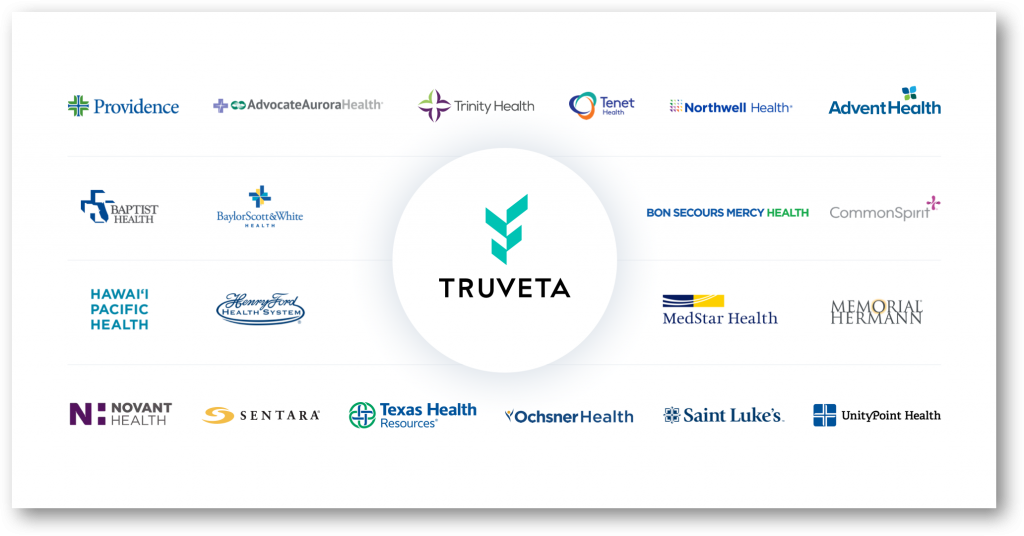
In Part I, we profiled three recently formed, provider sponsored platforms: Truveta, Xealth, and Graphite Health. These platforms are backed by multiple health systems (ranging from 3 to 20) and have ambitious plans for national expansion.
In Part II, we comment on the “why” — describing market forces leading to provider sponsored collaborative platforms. We then discuss some provider platform challenges.
Trend Spotting: Health Systems Unite to Build Collaborative Platforms (Part I)
by Vince Kuraitis, JD and Randy Williams, MD
At first it might appear that traditional health systems are severely threatened by the new world of digital transformation, Big Tech and Big Retail. But…we’re observing that leading health systems have found a new way — collaborative, provider sponsored platforms.
In Part I we’ll briefly profile three recently formed, provider sponsored platforms: Truveta, Xealth, and Graphite Health.
The scale of these new provider platforms goes beyond anything seen today in local health care markets. Truveta’s providers represent more than 16% of all U.S. patient care. Xealth is available to more than 100,000 physicians. Graphite Health serves more than 30 million patients.
In Part II we’ll comment on the “why” — describing market forces leading to provider sponsored collaborative platforms. We will then characterize some of the challenges faced by these new provider sponsored platforms.
Six Takeaways From Teladoc’s Investor Day Presentations
What if you tried to impress investors through a series of presentations by company execs — and your stock tanked by nearly 15% over the next two days? That’s what happened to virtual care platform (VCP) company Teladoc last week. I’ll share six takeaways from Teladoc’s investor day presentations:
- Teladoc’s Vision as a Virtual Care Platform is Broad — VERY Broad
- “Whole-Person” Care Takes Center Stage
- Teladoc is Walking a Tightrope: Trying to Be Complementary vs. Competitive With Customers
- What Wasn’t Discussed — Uncertainties of “The Telemedicine Cliff”
- What Wasn’t Discussed — An App Store for the Teladoc Platform?
- Investors Weren’t Pleased
Here’s a link to Teladoc’s 121 slide deck presented to investors. My POV here is that of a strategic advisor with over 30 years diverse healthcare experience across 150+ companies — with a unique focus on platform strategy and business models.
Let’s take a look at each of the six points.

The “e-CareManagement Blog” is now “The Healthcare Platform Blog”
You’ve been a subscriber to receive new postings on e-CareManagement Blog. I’m writing to let you know about a shift in direction — the “e-CareManagement Blog” is becoming “The Healthcare Platform Blog”.
Many of the past themes will continue: technology, chronic disease management, care coordination, health IT, innovative business models and strategy, telehealth/virtual care, and others. Also continuing will be the spotlight ACROSS sectors of healthcare rather than within individual sectors, e.g., hospitals, pharma, devices.
Introducing The Healthcare Platform Blog
Will Google Health Platformize the Electronic Health Record Market?
by Vince Kuraitis, Edward G. Anderson, and Geoffrey Parker
The COVID-19 pandemic has accelerated calls for the development of EHR 2.0 (electronic health record 2.0) – the next generation of EHRs with extended platform features and capabilities.
Who will answer this call? While existing EHR vendors have made modest efforts, the door is open for big tech companies and start-ups to develop functionality to envelop and disintermediate current EHRs. We highlight early efforts by Google Health Care Studio as having the potential to bring platform functionality to a sector of the healthcare industry known for resistance to change and innovation.
Read the full article in The Health Care Blog.

Do Virtual Care Platforms Compete With Local Care Providers? It’s Complicated
by Vince Kuraitis and Thomas Wilson, Ph.D
We describe eight ways in which virtual care platforms (VCPs) are “potentially” competitive with local care providers:
1) Low Acuity/Episodic Care
2) Virtual Primary Care
3) Specialist Care
4) Chronic Disease Management
5) Second Opinions
6) Specialized Populations/Conditions
7) […]

Healthcare Delivery Disrupted? The Rise Of Platforms In Healthcare
by Seth Joseph and Vince Kuraitis
If the taxi industry was so easily disrupted by platform businesses, could the healthcare industry be next? Are there characteristics these two industries share (or distinguish them from each other) that can help us understand the role platforms can play in healthcare? And why does it make sense to ask these questions now?
Seth Joseph and I address these questions in our Forbes article “Healthcare Delivery Disrupted: The Rise of Platforms in Healthcare“.

Will Virtual Care Platforms (VCPs) Become Healthcare’s Mega-Platforms?
by Vince Kuraitis and Seth Joseph
Let’s start with a pop quiz. Take 15 seconds to look at the list below, asking yourself the question “What do all these have in common?”
address booksvideo cameraspagerswristwatchesmapsbookstravelgamesflashlightshome telephonescash registersMP3 playersDay timers
alarm clocksanswering machinesThe Yellow Pageswalletskeystransistor radiospersonal digital assistantsdashboard navigation systemsnewspapers and magazinesdirectory assistancetravel and insurance agentsrestaurant guidespocket calculators
The commonality is that all of these were disrupted by smartphones and their operating system (OS) platforms — Google Android […]